
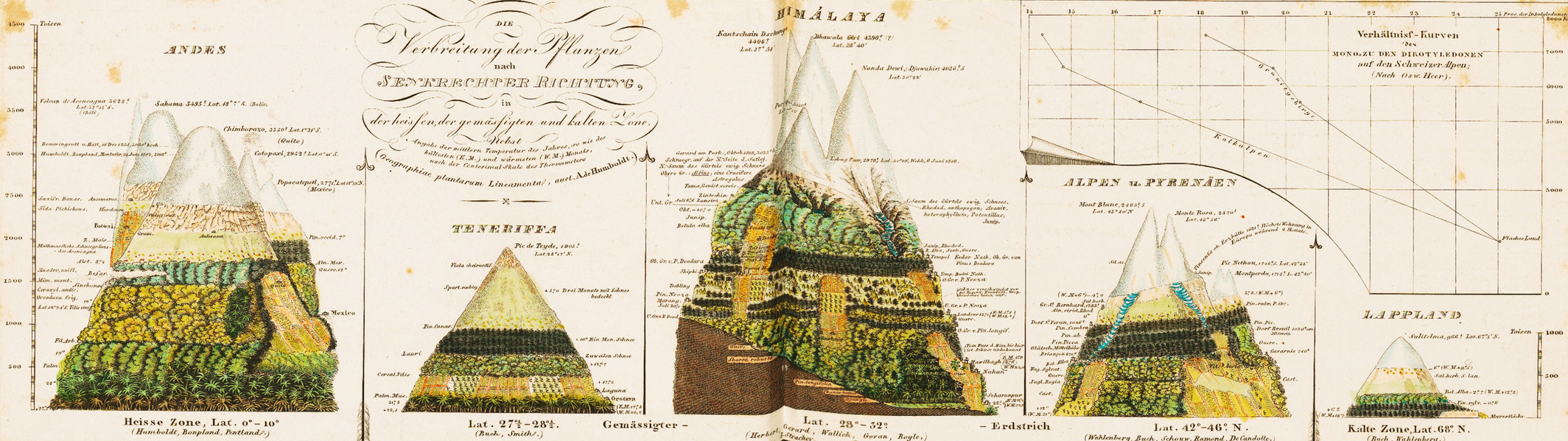
Biogeography is the study of evolution across geographic space. Alongside my broad-scale work on deep-time evolution, I lead a parallel research program focused on recent diversification in Neotropical suboscine passerines, a clade representing roughly 10% of living bird diversity.
Continental-Scale Population Genomics
This project represents a decade-long international collaboration investigating the cryptic species complex Pseudopipra pipra (Berv et al. 2021, Molecular Phylogenetics and Evolution).
Download Paper 2020 AOS Conference Talk Press Coverage (NSF)
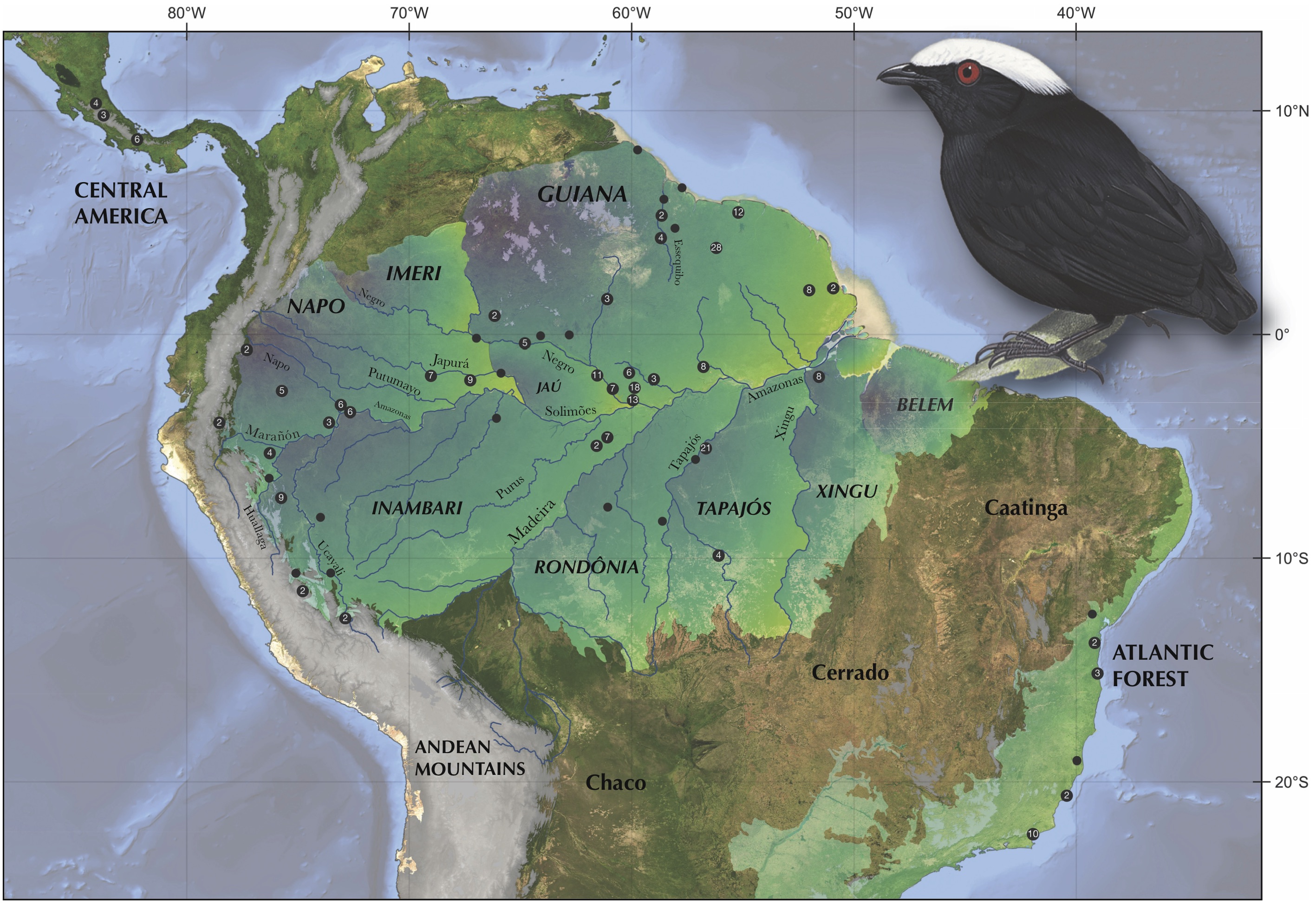

Our study applied short-read sequencing to generate thousands of markers from a continental dataset of approximately 300 individuals, enabling direct tests of hypotheses about Amazonian and Andean biodiversity assembly.
Spatial Barriers and Speciation Dynamics
Pseudopipra lineages occur across multiple dispersal barriers, including elevational gradients in the Andes, major Amazonian rivers, the Cerrado, tepuis, and the Isthmus of Panama. This geographic structure makes the system unusually informative for testing how barriers at different scales shape divergence.
Our principal result supports the hypothesis that Andean uplift and mountain-associated environmental heterogeneity can act as a species pump for some Neotropical taxa, contributing to exceptionally high regional diversity.
Collaboration and Ongoing Work
This research depends on close collaboration with colleagues at the Instituto Nacional de Pesquisas da Amazônia (INPA) in Manaus, Brazil. Current work includes chromosome-scale assembly development using PacBio HiFi, Hi-C, and optical mapping to support future analyses of speciation dynamics.
Fieldwork image updates for this project are in progress.